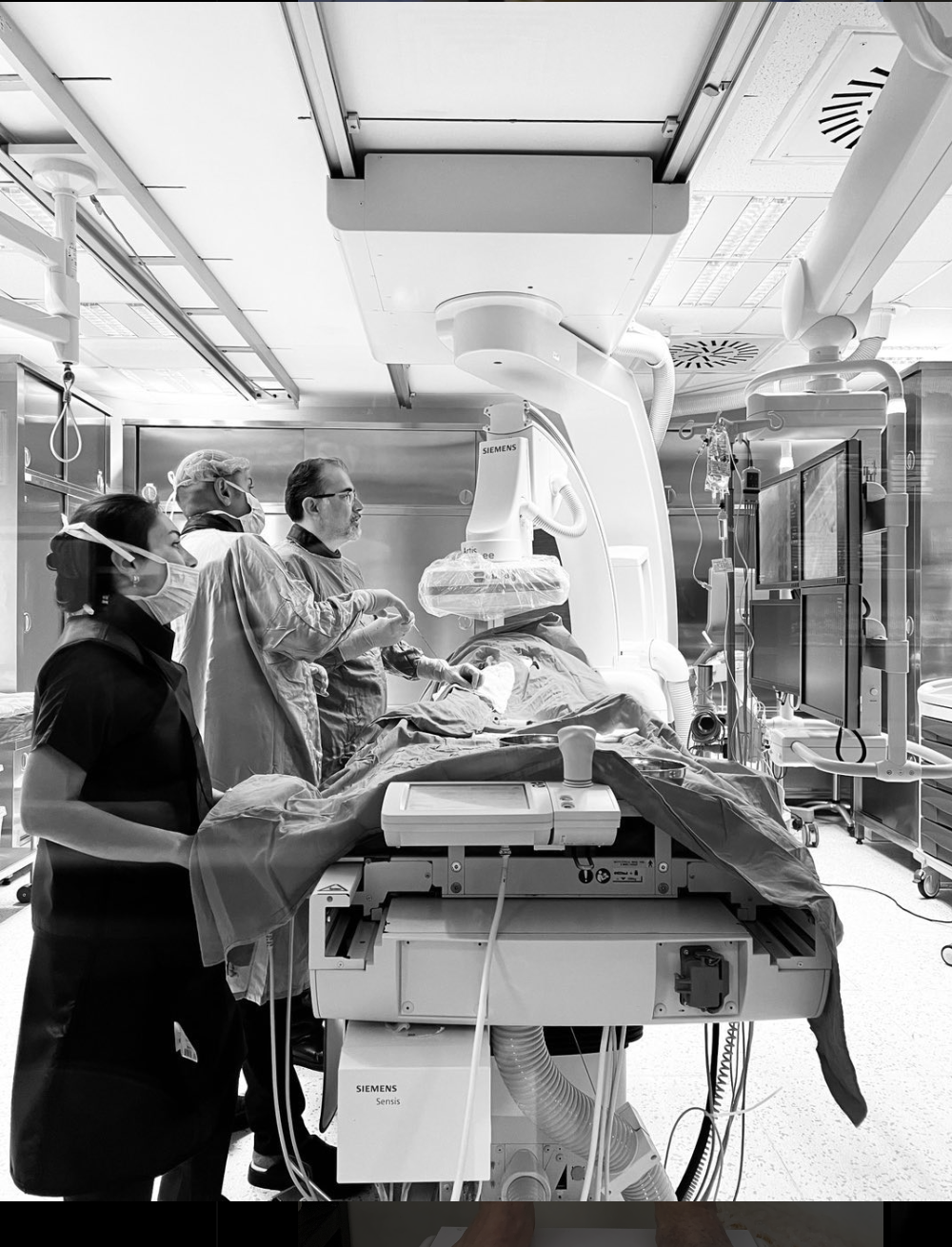
Prof. Dr. Aykut Recep Aktaş: Health Illuminated by Modern Treatments in Interventional Radiology
Dear patients, esteemed colleagues, and all readers interested in health,
I am Prof. Dr. Aykut Recep Aktaş, an Interventional Radiology Specialist (NOT a Urologist). My area of specialisation is Interventional Radiology, one of the most innovative and rapidly advancing medical disciplines of our era. In this field, guided by advanced imaging techniques (ultrasound, computed tomography, fluoroscopy, MRI), we diagnose and treat many diseases using minimally invasive methods, without the need for surgical incisions. Our aim is to offer our patients the most effective modern treatment options with less pain, shorter recovery times, and lower risks.
Fundamental Principles of Interventional Radiology: Image-Guided Precision Intervention
Interventional Radiology encompasses procedures performed by entering the body with a small needle or catheter. Unlike traditional surgery, a small entry point, usually a few millimetres, is sufficient instead of large incisions. This means patients experience significantly less trauma, minimal post-operative pain, and shorter hospital stays. The advanced imaging technologies used during procedures guide us in real-time within the body, allowing us to reach the target area with extreme precision and safety.
Modern Treatments Offered by Interventional Radiology for Various Diseases
Interventional Radiology offers groundbreaking solutions for the treatment of a wide range of diseases. Here are some of these modern treatment approaches:
Oncological Interventions: A Minimally Invasive Approach to Cancer
In cancer treatment, tumour ablation methods (radiofrequency, microwave, cryotherapy) are used to destroy tumours by heating or freezing them. In these procedures, special needles are precisely inserted into the tumour under imaging guidance. Commonly applied to liver, kidney, lung, and bone tumours, these procedures enhance patients' quality of life while minimising surgical risks. Furthermore, for liver tumours, chemoembolisation (TACE) or radioembolisation (TARE) delivers chemotherapy drugs or radioactive substances directly to the tumour, ensuring targeted treatment without systemic spread.
Treatment of Vascular Diseases: The Saviour of Vessels
Vessel blockages or narrowings are one of the strongest areas of Interventional Radiology. With angioplasty and stenting, blocked or narrowed vessels are widened with a balloon, and if necessary, special stents are placed to maintain patency. In conditions such as peripheral artery disease, carotid artery stenoses, and dialysis fistula issues, we restore blood flow, reducing the risk of organ loss and improving patients' quality of life. We also offer safe endovascular solutions for the treatment of aneurysms (vessel dilatations).
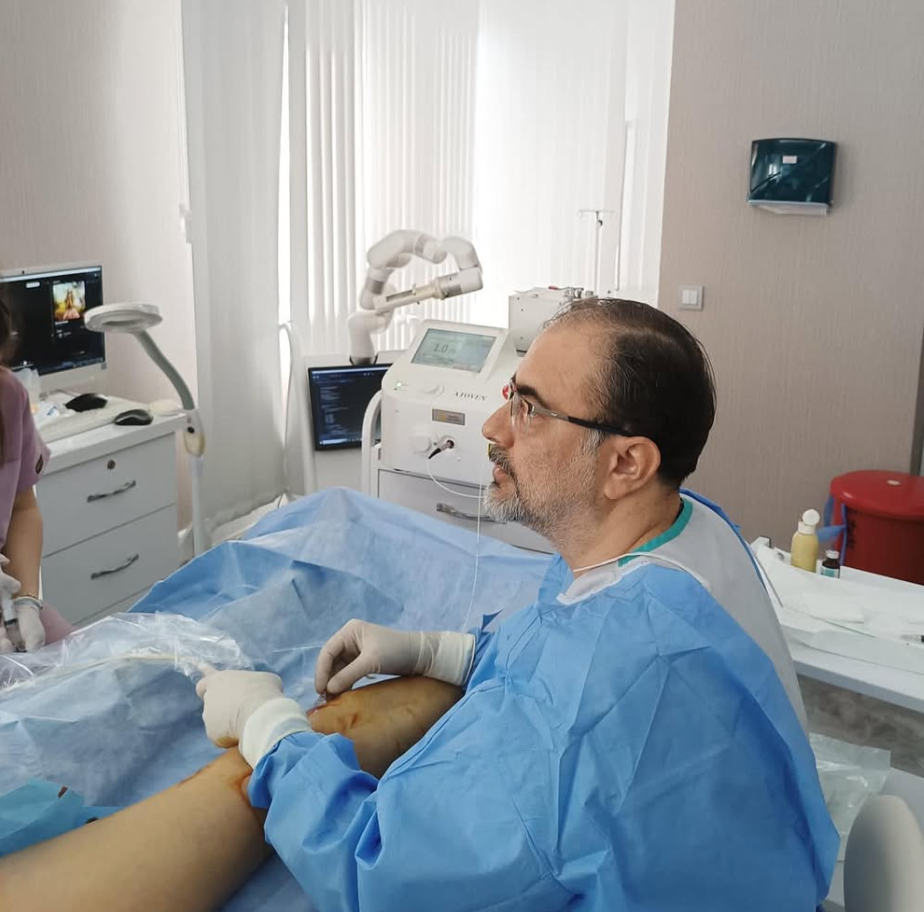
Innovative Approaches in Women's Health: Uterine Fibroid Embolisation
Uterine fibroids, common in women and causing symptoms like pain and bleeding, can be effectively treated with minimally invasive Interventional Radiology methods. In a procedure called Uterine Artery Embolisation (UAE), the arteries supplying the uterine fibroids are blocked by accessing them through the groin artery. This causes the fibroids to shrink and symptoms to resolve. This method preserves the uterus and offers a significant alternative modern treatment option to surgery.
Pain Management and Spinal Treatments
As Interventional Radiology specialists, we intervene in cases of chronic back and lower back pain, nerve compressions due to herniated discs, or spinal fractures. We alleviate pain with image-guided nerve blocks and epidural injections. For spinal fractures, we strengthen the spine, relieve pain, and restore patient mobility by injecting bone cement using vertebroplasty or kyphoplasty methods.
Interventional Radiology in Men's Health: Varicocele and BPH Embolisation
For men, Interventional Radiology offers a non-surgical alternative for treating varicocele (enlarged veins in the testicles), which can be a cause of infertility. With varicocele embolisation, the enlarged veins are blocked under angiography guidance, restoring normal blood flow. In Benign Prostatic Hyperplasia (BPH), or benign prostate enlargement, Prostatic Artery Embolisation (PAE) aims to shrink the prostate and alleviate symptoms by blocking the arteries supplying it. These are modern treatment approaches that carry no surgical risks and ensure rapid recovery.
Advantages of Interventional Radiology
Interventional Radiology offers numerous advantages compared to traditional surgery:
- Minimally Invasive: Procedures are performed through small punctures instead of large incisions.
- Less Pain: Post-procedure pain levels are significantly lower.
- Shorter Recovery Time: Patients can often be discharged the same day or the day after, returning to their daily lives more quickly.
- Lower Complication Risk: Risks associated with general anaesthesia or major surgery are reduced.
- Targeted Treatment: Imaging guidance allows us to focus precisely on the problematic area.
Conclusion
Interventional Radiology serves as a bridge in the medical world, providing solutions to patients' health problems, enhancing comfort, and raising treatment standards. Our primary goal is to improve our patients' quality of life by offering minimally invasive and highly successful modern treatment methods for the diagnosis and treatment of many diseases. The role of Interventional Radiology in future medicine is gaining importance every day.
For all our minimally invasive treatment options in Interventional Radiology, please visit the Prof. Dr. Aykut Recep Aktaş website.